Protocol Series · No. 02 · Mobility
They stop jumping years before they stop walking.
By Jules Ortega · Reviewed by Dr. Isabel Coleman, DVM CCRP · 9 min read
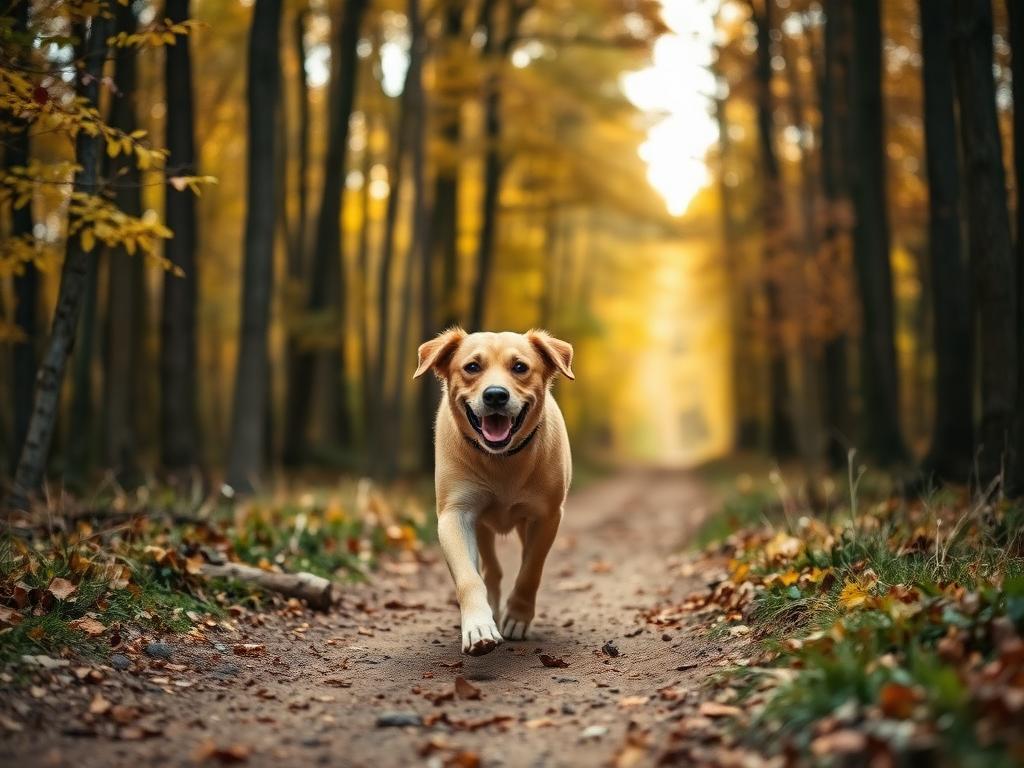
Most owners discover their dog has joint disease the moment the dog refuses to do something he used to do. The truth is the disease began three or four years earlier — quietly, asymptomatically, in the cartilage of one hip or one elbow. By the time you notice, the window for prevention has narrowed.
We don't say this to frighten you. We say it because joint disease is the single most modifiable cause of lost life-quality in dogs and a growing problem in cats. The interventions are not exotic. They are weight, movement, and inputs — in roughly that order.
Weight, first
Every extra pound on a 40-pound dog is the equivalent of about five pounds on a person, distributed across four legs that were never designed for it. A 2024 meta-analysis across 11 longitudinal studies found that dogs kept at a 4/9 body condition score lived roughly 1.8 years longer than littermates kept at 6/9 — and they walked comfortably for almost all of those years.
Movement, daily
- Two flat walks of 20 minutes beat one 60-minute hike every time.
- Three minutes of sit-to-stand drills before breakfast. Yes, really. It's the canine equivalent of a goblet squat.
- Avoid the weekend-warrior pattern. The biggest single risk factor for soft-tissue injury we see in clinic is "we don't walk much during the week, but Saturday we did a six-mile loop."
Inputs, last — but not least
Joint supplements are the most over-marketed and under-formulated category in the pet industry. Glucosamine alone, in the standard doses sold at big-box stores, has been disappointing in placebo-controlled canine trials. The interesting data is in bioactive peptides — short, targeted amino acid chains that signal cartilage cells directly — but only when they actually reach the bloodstream intact.
A four-week starter
- Week 1. Establish a baseline. Take a one-minute video of your dog walking away from you on a flat surface. You will reference this in week four and the difference is often startling.
- Week 2. Add sit-to-stands. Three sets of five. Then build slowly. Skip if your dog is currently flared.
- Week 3. Introduce a supplement on the same schedule, every day, with food. Consistency beats potency.
- Week 4. Take the same one-minute video. Compare. If you are not seeing change in stride length, rest period, or willingness to jump, the bottleneck is almost always weight or absorption — not the active ingredient.
For the protocol our nutrition editor pairs with this one, read The Gut-First Protocol →. The two compound. Inflammation downstream of a struggling gut shows up in joints first.